
You know that feeling when you finally park your RV for the season and think, “I’ll deal with maintenance when spring comes”? Yeah, almost every RV owner has been there. But here’s something that caught me off guard when I started researching this: winter might actually be the absolute best time to seal your roof. I know, it sounds backwards. But stick with me, because this decision could genuinely save you thousands next year.
Think about what happens to your roof when temperatures start dropping. Water sneaks into those tiny cracks you probably can’t even see. The sun goes down, it freezes, and boom—it expands. The next day, it thaws, more water enters, and the cycle repeats. By the time spring rolls around, what could’ve been a quick couple-hour job has turned into a nightmare that costs way more money than you want to spend. I’ve heard too many stories from RV owners who waited and ended up facing structural damage that could’ve been prevented.
This year, why not flip the script? Get your roof sealed while you have the time and favorable weather conditions. Your future self will thank you.
The Hard Truth About Waiting Until Spring
Look, I get why people put off roof work. It’s not glamorous, it’s not fun, and when the weather’s getting cold, the last thing you want to think about is climbing on top of your RV. But that procrastination habit? It’s genuinely one of the most expensive mistakes RV owners make.
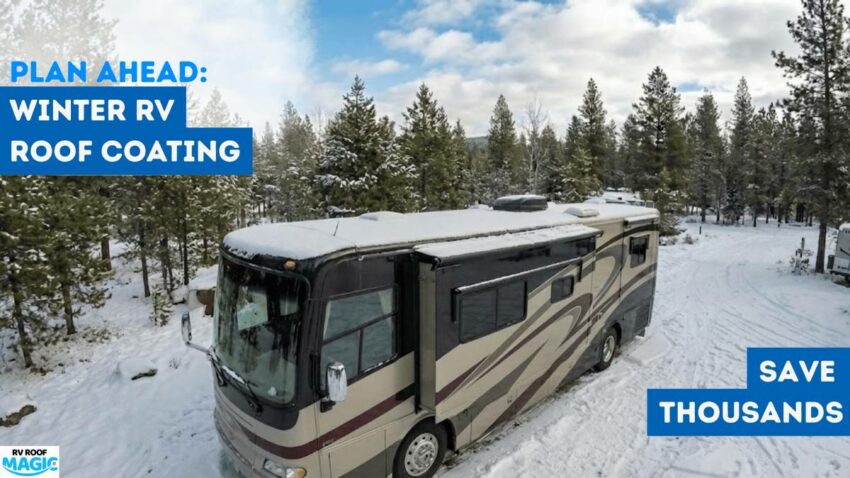
Winter is relentless on roofs. You’ve got heavy snow sitting on top, ice dams forming, and temperatures that swing wildly between day and night. Every single day in winter, you’re looking at a mini disaster happening on your roof. Water enters during the day when it’s warmer. Then the temperature drops, that water freezes, and ice expands—it’s like a tiny jackhammer working on your roof every single night.
Do this enough times over a winter, and you’re not just talking about a surface problem anymore. Water is seeping deep into the wood beneath your roof. Insulation gets waterlogged. Mold starts growing in places you can’t see. And here’s the kicker—you won’t even know it’s happening until spring, when you finally look at your roof and realize the damage is absolutely catastrophic.
That “small leak” you ignored all winter? It will cost you five, ten, or maybe fifteen thousand dollars in repairs. A structural repair job that started because you didn’t want to spend a few hours and a couple of hundred dollars on a coating. That’s the real price of putting things off.
When you apply quality roof sealants right now, you’re basically putting a force field around your roof. You’re preventing water from entering during the freeze-thaw cycle. It’s preventing damage rather than cleaning it up afterward, and the cost difference is stark.
Why Winter Coating Used to Be Impossible (And Why It’s Not Anymore)
For a long time, everyone said you couldn’t coat a roof in winter. And honestly, they were right—with most products. Water-based coatings don’t perform well in cold conditions. They’d freeze before they dried, wouldn’t bond to the cold surface, and humidity would completely damage them. So the whole industry basically said, “Sorry, coating season is summer only.”
But RV Roof Magic decided to break that rule.
Instead of a water-based formula like most other products, this one uses a solvent-based system. Completely different animal. And the really wild part? This stuff can actually pause while it’s curing.
Here’s what that means in real life: you don’t need perfect July weather. You don’t need a whole week of sunshine and low humidity. You need a window where the daytime temperature hits around 50°F for a few hours. The coating starts working during the warmer afternoon hours. Then, when the sun sets and it gets cold again, curing stops. Pauses. Waits. When the sun comes back out the next day and warms things up, it picks right back up where it left off, as if nothing happened.
This is absolutely game-changing for late-fall and early-winter work. You’re not waiting for perfect conditions that might never come. You’re just waiting for a decent afternoon, and you’ve got a window to get your roof sealed. A couple of mild days in December? That’s all you need to lock in 18-20 years of protection.
The Numbers Actually Make Sense When You Look at Them
Let’s talk money for a second, because this is where winter coating really shines.
Most roof coatings? You’re doing this job every 3, 4, maybe 5 years if you’re lucky. That means you’re repurchasing the product. You’re paying for the application again. You’re investing your time (or paying someone else’s time) again and again. Zoom out to a 15- or 20-year period, and you’ve effectively coated your roof three, four, or sometimes five times. The costs keep adding up.
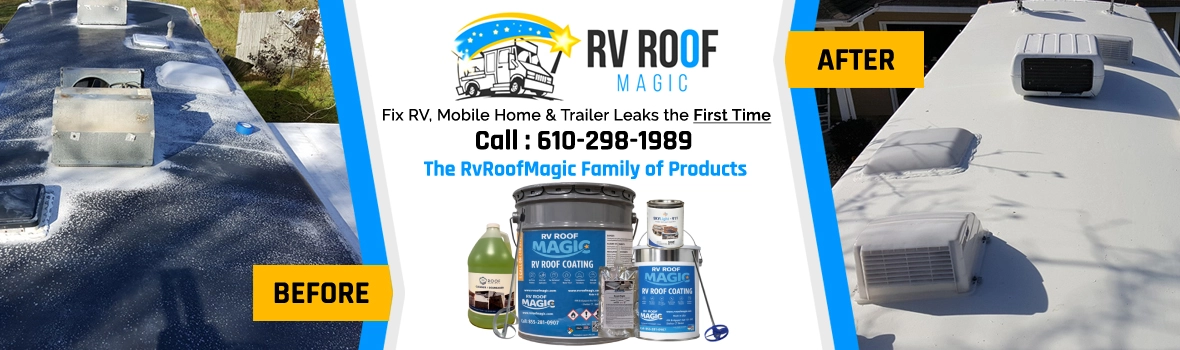
RV Roof Magic works entirely differently. This product has been proven in the RV industry for over 30 years. What makes it special is that one application can protect your roof for 18-20 years. We’re talking about nearly four times the lifespan of a conventional coating.
Break it down, and the savings get really obvious:
- You’re not recoating constantly: Everyone else is painting their roof every few years. You’re doing it once and calling it done for almost two decades.
- There’s no primer step: This is literally a one-coat system. No primer, no extra product, no additional hours of work. You save on materials and time.
- You’re avoiding the spring catastrophe: Skip the coating now, and spring almost always brings a surprise. Rotted wood. Damaged insulation. Mold in your walls. Getting that fixed? $3,000 to $10,000 easily. Probably more.
If you’re considering rubber roof repair, this math becomes clear. Spend a few hundred bucks on a quality coating right now, or pay thousands for emergency repairs next spring. Your RV stays valuable. You can enjoy your rig instead of worrying about whether the roof will leak on your next trip.
How to Actually Do This (It’s Not as Hard as You’d Think)
Here’s the thing—applying rv roof reseal in cooler weather isn’t rocket science. You don’t need special tools or be a professional. But there are a few tricks that make the difference between a job that goes smoothly and one that gives you headaches.
Step One: Wait for the Right Day
Pull up your weather forecast and find a day where the high is going to reach at least 50°F. That’s it. That’s your target. Start your work in the late morning, once the morning dew has burned off and your roof has warmed naturally in the sun. This gives your coating a crucial 3- to 4-hour window to begin waterproofing before the temperature drops in the evening. Simple timing makes all the difference.
Step Two: The Flash Coat Trick (For EPDM Roofs After September)
If you’re working with an EPDM roof and it’s past September, here’s a pro move that pays off: apply a super light coat first. Just a skinny layer. Let it dry completely—and in cooler weather, that means waiting 24 to 36 hours instead of the 7 to 10 hours you’d stay in summer. Then apply your full coat. This two-step approach prevents solvents from becoming trapped, preventing bubbling and adhesion issues. It takes patience, but you end up with a flawless finish that lasts.
Step Three: That’s Actually It
No primer. No special prep. Clean your roof, make sure it’s dry, and apply the coating. EPDM? Works. Fiberglass? Works. Metal? Works. Vinyl? Works. The only exceptions are PVC roofs (which require a vinyl adhesion test first) or silicone coatings (which must be stripped). For everything else, you clean, dry, and coat. You can literally apply it today and drive tomorrow.
Your Skylights Matter Too (Don’t Forget Them)
While you’ve got your roof on the brain, don’t sleep on your skylights. They’re often the first place to fail on an RV roof. Cold weather makes old plastic brittle. It cracks. It degrades. And now you’ve got another leak waiting to happen.
This is where Skylight 911 comes in clutch. It’s a clear coat explicitly designed to protect skylights from oxidation and chalking. One application, long-lasting protection. It uses the same principles as your roof coating and covers about 25 square feet per container. It’s affordable, it’s easy, and it’s the finishing touch that makes your entire roof system leak-proof.
Make the Smart Call This Winter
Here’s what separates RV owners who get stressed every time it rains from those who enjoy the trip: they sealed their roofs when they had the chance.
Right now, you’ve got the opportunity to protect your investment. You’ve got time to do it. You’ve got a product that actually works in these conditions. And you’ve got the chance to save yourself thousands of dollars in repairs that you absolutely do not want to deal with.
RV Roof Magic has earned a solid 4.8 out of 5 rating from hundreds of real customers over more than 25 years. People trust it because it actually works. It works in spring, it works in summer, it works in fall, and unlike almost every other product out there, it works in winter too.
Don’t let the cold weather stop you. Don’t wait for spring. Use these winter weeks to reseal your RV roof with a product proven and ASTM-certified. Protect your roof. Protect your wallet. And when spring arrives, and you’re loading up to hit the road, you’ll drive off knowing your roof is sealed, protected, and ready for whatever comes next.
Contact us at 855-281-0907 or visit our website at RV Roof Magic for more details.