

A new year is a clean slate—until the first surprise rainstorm reminds every RV owner of one thing: the roof runs the show. A small crack at a seam can turn into stained ceiling panels, musty odors, and a repair list that grows faster than a road trip wishlist. The good news is that 2026 roof problems are often preventable with a few repeatable habits and the right materials.
Below are five practical (and realistic) roof resolutions that keep the routine simple: inspect on schedule, clean the right way, protect your weak points, respond fast to leak warnings, and make a brilliant plan for recoating vs. replacement.
Resolution #1: Schedule roof inspections (and actually stick to them)
Most “roof emergencies” were visible earlier—just not caught in time. RV Roof Magic recommends biannual (twice-yearly) roof maintenance and inspection, plus additional inspections after severe weather such as high winds or hail.
A strong inspection habit looks like this:
- Walk the roof and check for punctures, tears, loose coating, and debris buildup.
- Pay extra attention to drainage and ponding areas, since standing water increases the chance of moisture entering if there is physical damage (cut/puncture).
- Inspect from the underside too—look for evidence of leaks, deteriorated decking, cracks, movement, or moisture infiltration.
Safety note worth repeating: roof surfaces can be slippery when wet, and ice/frost can be hard to see.
Resolution #2: Clean with the right products (and avoid the roof-killers)
Cleaning is not just cosmetic. RV Roof Magic’s guidance emphasizes keeping the roof clean and free of oils and debris to maximize performance and service life. Their care guidelines suggest two cleanings per year and inspecting before/after cleaning for tears or blisters.
Also important: avoid the wrong chemicals. Their blog on keeping a roof in great shape warns against using cleaners with petroleum solvents, citrus ingredients, or abrasives, as they can weaken bonds and damage the roof material. Another RV Roof Magic rubber-roof care post also advises avoiding petroleum distillates and citrus cleaners.
If pressure washing is part of the routine, RV Roof Magic provides clear limits: use a 40-degree white nozzle and a maximum of 2000 PSI, start 18 inches from the surface, and never get closer than 6 inches to the roof. Start your rv roof care and maintenance today.
Resolution #3: Treat seams, edges, vents, and skylights like “priority assets.”
Most roof failures don’t begin on a clean, flat surface—they start at transitions and penetrations.
RV Roof Magic’s maintenance blog recommends inspecting seams and sealants, and checking skylights, A/C units, vents, racks, and ladders because these areas can hide cracks, dirt, and mold. Their winter warning-sign guide highlights common stress zones such as vent collars, skylight edges, roof seams/laps, and edge borders.
A practical habit: keep a small “roof kit” ready before climbing up. RV Roof Magic recommends keeping supplies on hand, including a caulking gun, seam roller, roof patches, roof cleaner, and RV Roof Magic sealant. Their rubber-roof care guide also lists compatible support products, such as Skylight 911, Butyl MS Caulk, Seam Tape, and RV Roof Magic, for full-coverage sealing.
Resolution #4: Make leak response a same-week task, not a “later” project
The fastest way to make roof repair expensive is to delay it. RV Roof Magic’s care guidance encourages touching up damaged areas immediately (for example, damage caused by branches/limbs) to prevent additional deterioration.
If interior moisture is detected, their winter guide recommends acting immediately: inspect after rainfall, use a low-pressure hose test to locate leak paths, and then reestablish watertight seals once the source is identified. This will ensure that rv roof leak repair is handled swiftly, preventing long-term damage.
Resolution #5: Plan for recoating early—and avoid premature replacement
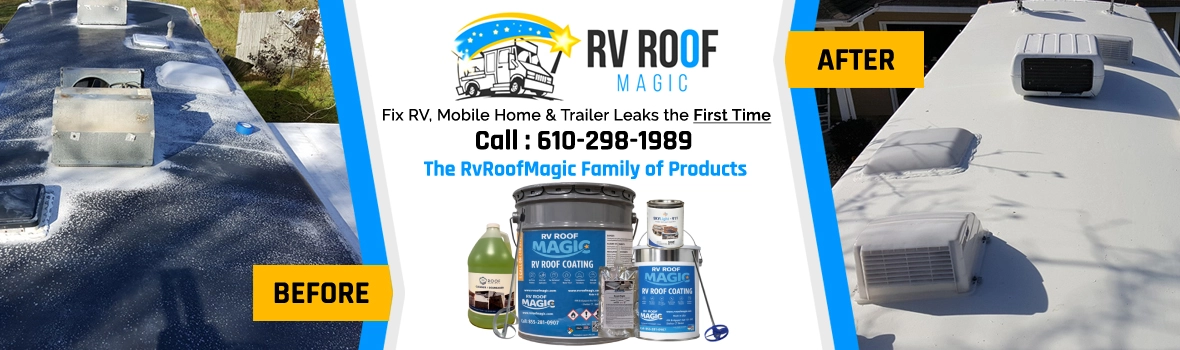
Many owners think the only endgame is replacement. RV Roof Magic’s position is clear: “Why pay thousands on a new roof… RECOAT AND ADD 15–18 YEARS OF SERVICE LIFE TO YOUR RV!” That single decision—recoat at the right time instead of waiting for failure—often determines whether 2026 is a “maintenance year” or a “major repair year.”
Key product/compatibility points from the RV Roof Magic roof repair page:
- One coat application, never needs a primer, and is backed by a 10-year warranty.
- Can go over surfaces including EPDM, fiberglass, butyl rubber, Hypalon rubber, TPO, metal, and can be applied over non-silicone products such as Dicor, Kool Seal, Flex Seal, elastomerics, and acrylics.
- A vinyl adhesion test is required, and an adhesion test is recommended if unsure what roof type is installed.
Significant limitation: the RV Roof Magic product page notes it will not adhere to PVC roofs or silicone coatings (it may remain tacky in those conditions).
If a replacement is genuinely needed, RV Roof Magic’s EPDM article explains why EPDM is widely used and valued for its weather resistance, durability, energy efficiency, and cost-effectiveness, making it an excellent choice for rv rubber roof replacement.
For those mapping materials for the season, it’s helpful to reference a dedicated page for motorhome roof sealant. This will guide you in selecting the right sealant to ensure your motorhome’s roof is well-protected and able to withstand harsh weather conditions.
Closing: make the roof plan now (before the busy travel season)
The most effective RV roof strategy for 2026 is boring—in a good way. Schedule inspections, clean carefully, protect seams and penetrations, address leaks promptly, and decide early whether a recoat can extend service life before jumping to replacement.
If project planning is the only thing holding the plan back, use the site tool here to size the job: RV Roof Magic Calculator