
If you own an older RV, you already know how it goes. One day everything feels fine… and then suddenly you notice a small stain on the ceiling, or maybe a weird soft spot near the corner of the roof. Most people ignore it at first. I did too. But that’s usually how rubber roof problems start. And once water finds its way in, it never really stops finding new places.
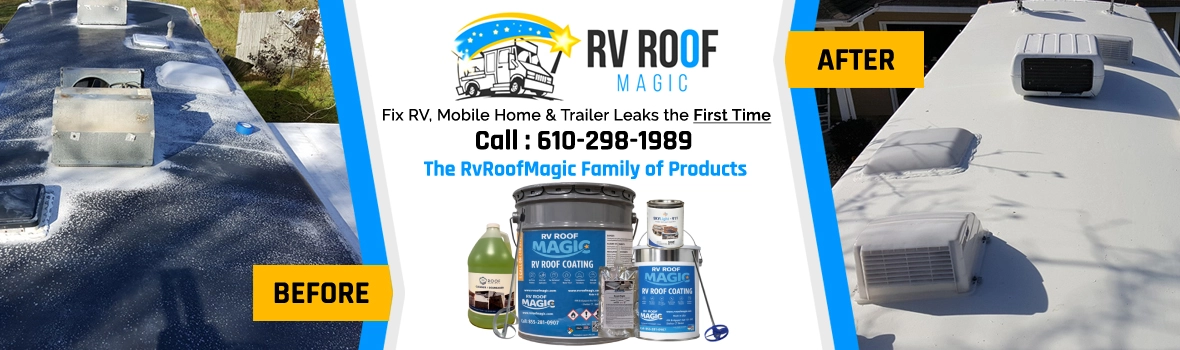
The good thing is – you don’t always need to replace the entire roof. In most cases, a proper RV roof sealant or RV roof coating can completely change the situation and save you from a very expensive repair.
At RV Roof Magic, the idea is simple: fix what’s there, protect it properly, and don’t rush into a full replacement unless it’s necessary.
Old rubber roofs don’t fail all at once
People usually think an RV roof “leaks suddenly,” but that’s not really how it happens. Rubber roofs age slowly.
First, the sealant around the vents starts getting small cracks. Then the edges around the skylights begin to dry out. After that, tiny pinholes or seam gaps begin to form. You won’t even notice most of them until rain hits at the wrong angle. And honestly, most RV owners only realize the problem when they already have interior damage. That’s why early RV roof repair matters more than anything else.
So what actually works for old rubber roofs?
This is where most confusion starts. Some people go straight for patches. Others try random hardware store sealants. And some re-caulk everything and hope it holds. But rubber roofs need something a bit more structured.
A proper RV roof sealant is not just “glue.” It needs to stay flexible. Because your RV is always moving, heating, cooling, and twisting slightly on the road, if the sealant becomes hard, it will crack again.
And that’s why many RV owners eventually move toward a full RV roof coating system instead of just patching small areas. Not because patching is wrong… but because patching alone doesn’t stop long – term aging.
Sealant vs coating (this is where most people get it wrong)
Let’s keep it simple. An rv roof sealant is like fixing one leak in your house with tape. It works, but only for that spot.
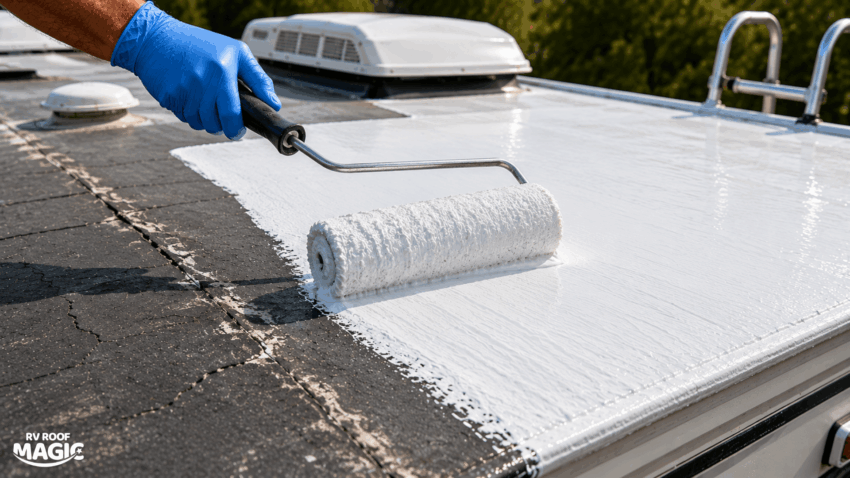
An RV roof coating is more like covering the whole roof with a protective skin. It doesn’t just stop leaks – it slows down future damage.
So: Sealant = quick fix
Coating = long – term protection
Best RV roof repair jobs actually use both.
When sealant is enough (and when it’s not)
There are situations where sealant alone is totally fine.
For example:
- A small crack near a vent
- A loose seam edge
- A fresh minor leak
- Or a roof that is still in decent shape overall
In these cases, using a proper RV roof sealant can easily stop the problem from growing.
But here’s the honest part most people don’t say: If you’re sealing something every few months, it’s not really fixed. That’s usually when a full RV roof coating starts making more sense.
Why is roof coating actually the real “budget saver”
It sounds strange at first – because coating the entire roof sounds like more work and more money.
But in reality, it usually saves money. Here’s why people switch to coating:
- No more repeated leak chasing.
- Less maintenance every season
- Better UV resistance (big one for RVs parked outdoors)
- Helps extend roof life instead of constantly repairing it
- Reduces the chance of hidden leaks spreading inside
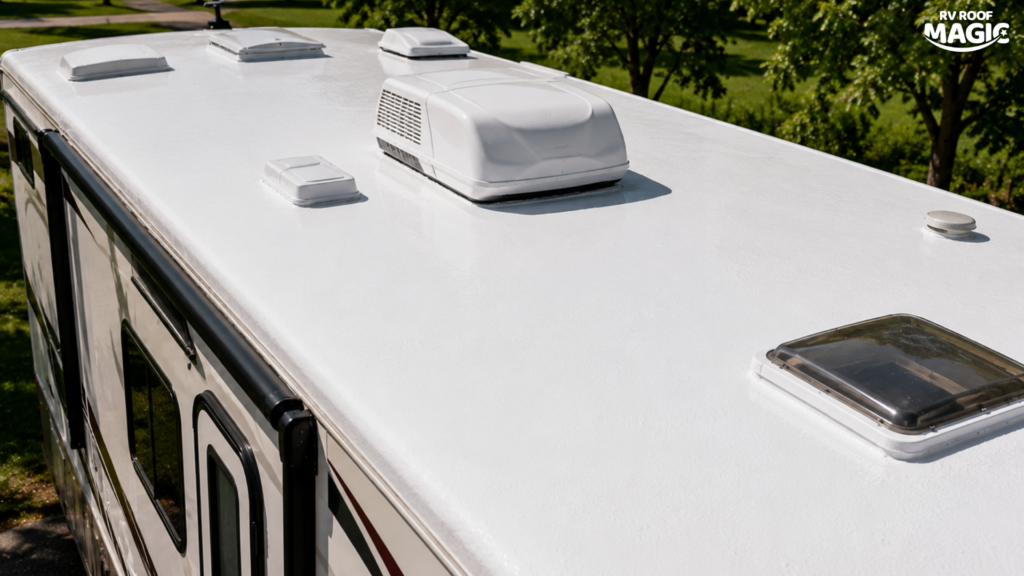
A good RV roof coating basically gives your old rubber roof a second life. And for most RV owners, that’s exactly what they need – not a full replacement.
The simple way RV owners usually fix old roofs
Most people don’t start with a big plan. It usually goes like this:
They see a leak → try a quick seal → leak comes back → get frustrated → then finally look for a proper system. A better approach for RV roof repair is actually pretty straightforward: First, clean the roof properly. Not just a quick rinse – actually remove dirt, chalking, and old loose sealant.
Then apply RV roof sealant to weak points, such as seams and vents. After that, apply a full RV roof coating so the entire surface gets protected, not just the broken parts. That combination is what actually lasts.
The mistakes that make roof problems worse
This part is important because most RV roof damage doesn’t come from storms… it comes from maintenance mistakes.
A few common ones:
- People apply sealant on dirty surfaces
- They skip cleaning the old oxidation
- They only fix visible leaks
- They wait too long after the first signs of damage
- They assume “no leak inside = no problem”
- By the time water shows inside, the damage is already spreading underneath.
- That’s why early RV roof repair matters more than perfect repair.
Why “budget – friendly” makes sense here
Nobody wants to spend a lot on RV maintenance. That’s fair. But replacing an entire rubber roof is one of the most expensive things you can do on an RV. Using a proper RV roof sealant early and later upgrading to an RV roof coating usually costs far less than waiting for a full failure. It’s one of those situations where a small action now avoids a big bill later.
How RV Roof Magic fits into all this
At RV Roof Magic, the focus isn’t on complicated systems or over-engineered solutions. It’s more about helping RV owners deal with real-world roof problems in practical ways.
Small leaks, old rubber roofs, aging sealant lines – these are normal RV issues. And the idea is to address them before they lead to interior damage or full replacement. The combination of RV roof sealant and RV roof coating is what makes that possible.
Final thought
Old rubber RV roofs don’t suddenly “die.” They slowly weaken, usually in places you don’t notice at first.
If you catch it early, a simple RV roof sealant can be enough. If the roof is already aging across multiple areas, a full RV roof coating becomes the smarter move. Either way, RV roof repair is not something to delay. Because once water starts moving inside an RV, it never really stays in one place. And fixing it early – properly – almost always costs less than waiting.